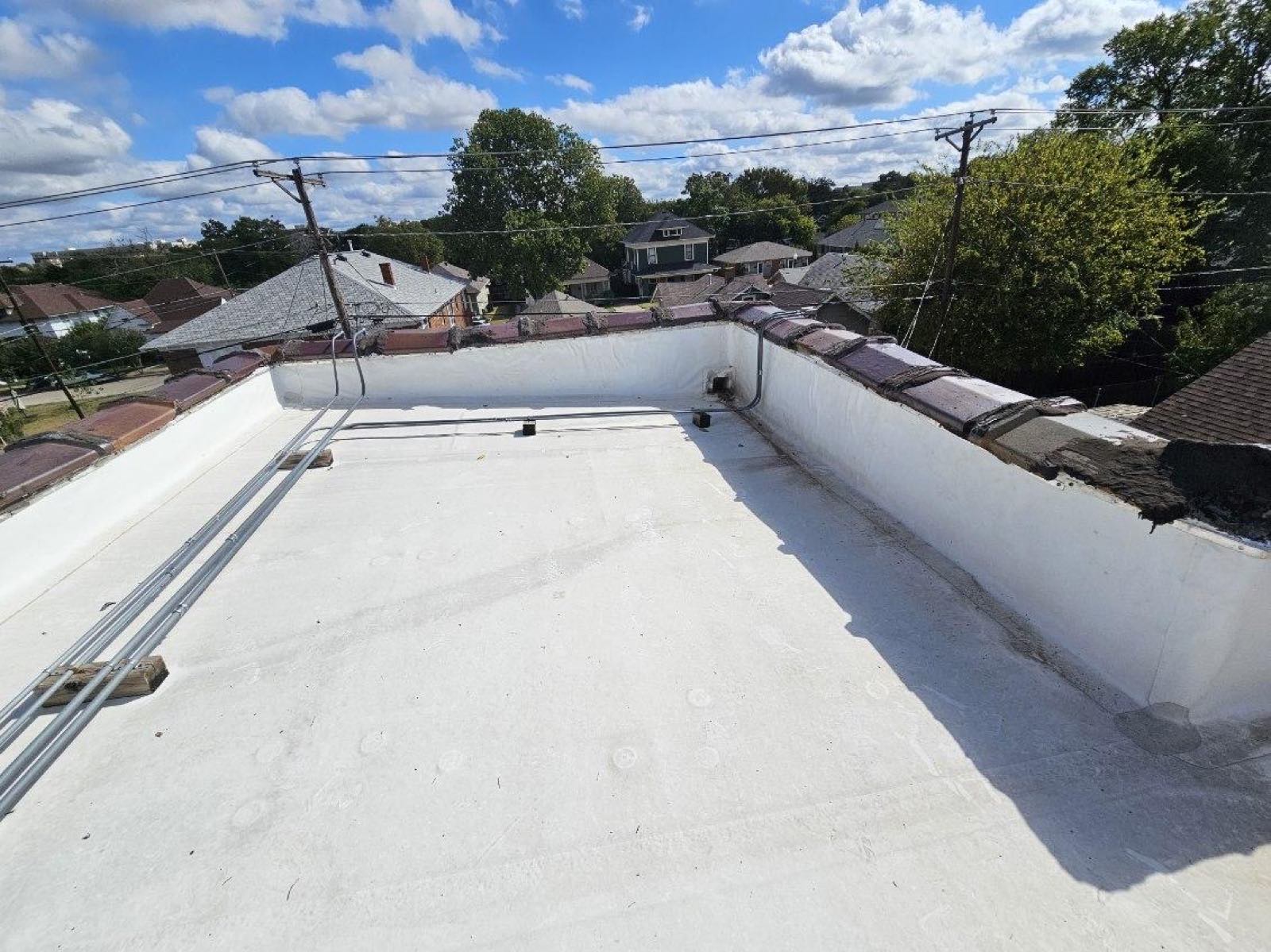
Home/Commercial/Flat Roof Repair
Flat Roof Repair
Curbs, drains, seams and parapet terminations. That is where we start.
Where They Leak
- Curbs and rooftop equipment, which is also where the mechanical contractor was working last. That is not a coincidence.
- Pipe and conduit penetrations, with failed pitch pockets and sealant-only details.
- Drains and scuppers, where clamping rings loosen and the drain is no longer the low point after the insulation compressed.
- Wall and parapet terminations.
- Seams. A cold weld from the original TPO or PVC install fails years later.
- Ponding areas, where standing water finds every weakness at once.
Ponding Is A Warning
Water standing more than forty eight hours after rain is a drainage defect. It adds structural load and degrades the membrane faster than anywhere else on the roof. Fixes run from rebuilding drains to adding scuppers to tapered insulation crickets, and which is right depends on why the water sits there.
Core Cuts First
The single most important fact about a low slope roof is whether the insulation is wet. You cannot see it from the surface and you cannot infer it from age. We cut cores and scan for moisture, then tell you what the assembly actually is. Dry insulation makes restoration good value. Saturated insulation means the assembly comes out, and a contractor who proposes coating over it is selling you a cover-up.
How We Document It
Photos of every defect with roof plan locations, core cut results, moisture scan findings and a line item scope. On an insurance or warranty claim, that documentation carries the argument.
Our Rain Arrives All At Once
North Texas rain does not fall gently for a day. A spring or fall storm can drop a large share of a month's total in an hour, and a low slope roof either moves that volume off the building quickly or holds it. Drains sized decades ago for a different roof assembly, strainers clogged with the cottonwood fluff that blows across the Metroplex in May, and a scupper set an inch too high all show up in the same downpour.
That is why we walk roofs during or right after heavy rain when we can. Standing water tells you where the deck has deflected, where insulation has compressed under traffic, and whether the drains are actually the low point. A dry roof on a July afternoon hides all of it. Ask your maintenance staff to photograph the roof mid storm, and send us what they get.
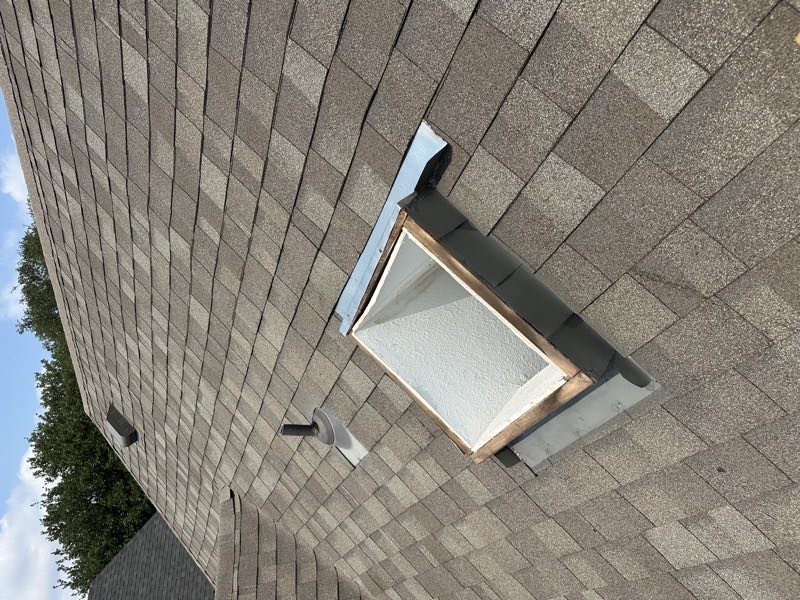
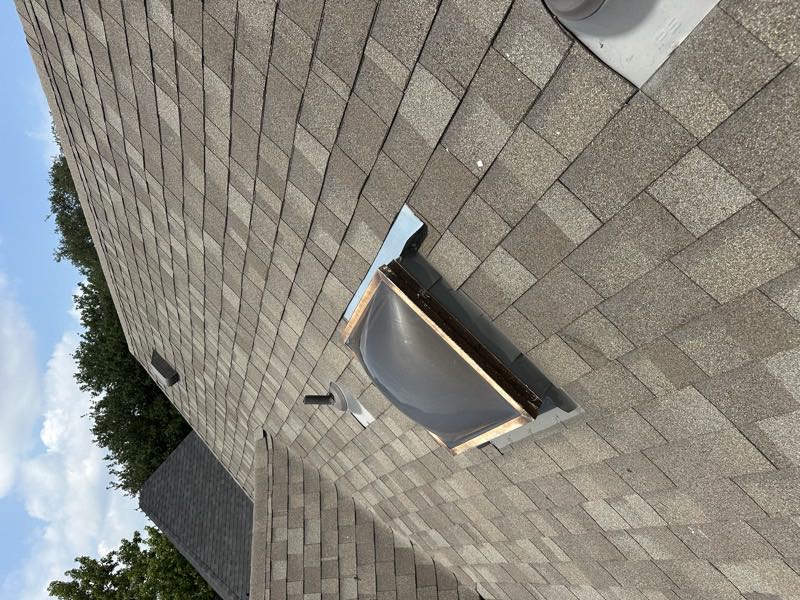
Damage We Documented
Photos from real inspections. Every one of these is damage, not finished work.
Questions
How do you find a leak when the water shows up forty feet away?
Will a repair void my manufacturer warranty?
Get it looked at before it gets expensive
Call and you get someone who has been on a roof, not a call center.